
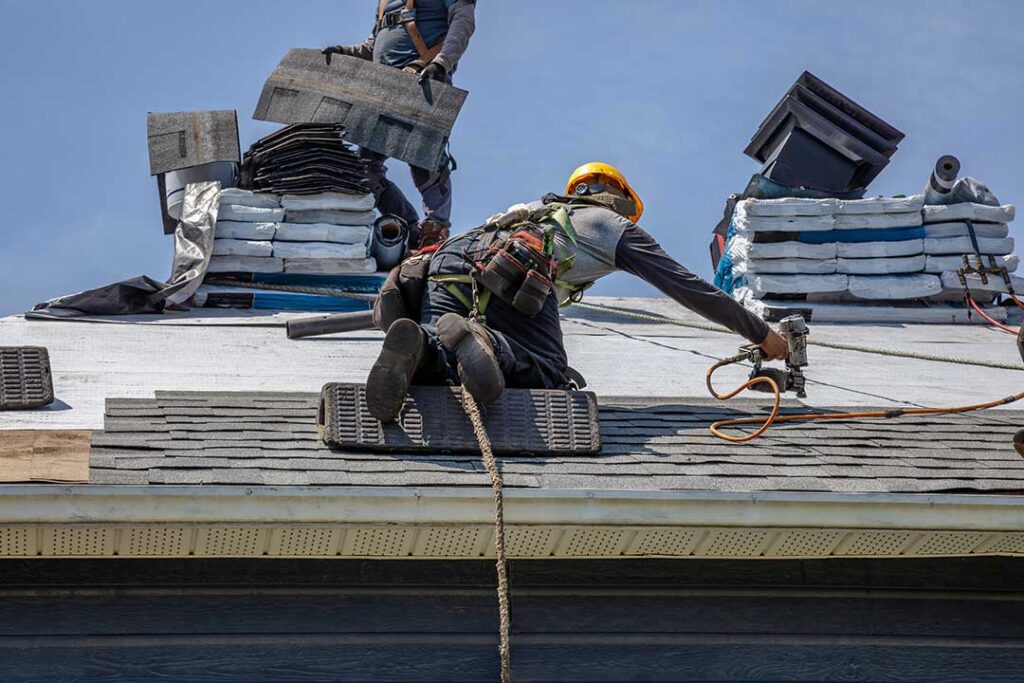
Why do gutters matter to the roof?
Gutters help move rainwater and melting snow away from the roof edge, walls, foundation, and soil around the home. A properly working gutter system does more than prevent puddles: it reduces the amount of moisture that can reach roof framing, fascia boards, soffits, siding, and basement areas.
In Schenectady, seasonal changes make this especially relevant. Rain, winter snow, spring thaw, falling leaves, and repeated freeze-thaw cycles can all place stress on drainage components. A roof may be covered with sound shingles, yet still develop moisture-related problems if water is not directed away from the structure.
Gutters support roof health by:
- Limiting water exposure at the roof edge
- Reducing the chance of rotting fascia and soffit materials
- Carrying runoff away from walls and the foundation
- Helping prevent ice buildup along the eaves
- Reducing soil erosion near the home
- Making roof drainage easier to observe and maintain
Gutters do not make a roof waterproof, and they cannot correct every drainage problem. Their role is to manage water after it leaves the roof surface.
How can poor gutter drainage damage a roof?
Poor drainage can damage a roof gradually, often without an obvious leak inside the home. Water may overflow from clogged gutters, collect behind the gutter, or soak the roof edge repeatedly.
Common problems include:
Rot at the roof edge
The lower edge of a roof often includes fascia boards, soffit materials, roof decking, and the ends of rafters or trusses. If overflowing water repeatedly wets these components, wood can absorb moisture and begin to decay. Paint may peel, surfaces may soften, and fasteners may loosen.
Damaged shingles near the eaves
Water that backs up beneath shingles can affect underlayment and roof decking. In winter, clogged gutters may also contribute to ice buildup along the eaves. As ice expands and melts, moisture can work beneath roofing materials and reach areas that normally remain dry.
Leaks near roof penetrations
A drainage problem does not always create a leak directly above the visible damage. Water can travel along roof decking, framing, or insulation before appearing around a ceiling fixture or wall. That can make the original source difficult to identify.
Loose gutters and trim
Heavy water, wet leaves, and ice add weight to gutter systems. If gutters pull away from the fascia, the exposed edge of the roof may drain unpredictably. Loose components can also leave gaps where water reaches the wood behind them.
What signs suggest a gutter problem is affecting the roof?
Visible gutter damage is only one warning sign. Residents should also watch for evidence that water is reaching areas where it does not belong.
Look for:
- Water spilling over the front of gutters during ordinary rain
- Gutters that sag, separate, or pull away from the roofline
- Peeling paint or dark staining on fascia boards
- Soft, swollen, or crumbly wood around the eaves
- Water stains on exterior walls below the roof edge
- Damp areas near the foundation after rainfall
- Soil erosion or deep channels beneath downspouts
- Shingle granules collecting near downspout outlets
- Moss or algae in places that remain unusually damp
- Icicles or heavy ice along the eaves during winter
Icicles alone do not prove that a roof has failed. They may form under certain weather conditions, especially when snow melts and refreezes. However, frequent heavy ice buildup combined with poor attic insulation, inadequate ventilation, or blocked gutters deserves attention.
How often should gutters be checked in this area?
Gutters should be checked at least twice a year and after major storms. A practical schedule is late spring and late fall, with additional inspections if the property has mature trees or experiences frequent debris accumulation.
A fall inspection is particularly useful because leaves, twigs, and seed pods can collect before winter. Spring checks help identify damage caused by snow, ice, wind, and repeated freezing and thawing.
A simple inspection should include:
- Looking for standing water or packed debris
- Checking whether the gutter slopes gently toward downspouts
- Examining joints and end caps for leaks
- Confirming that downspouts remain connected
- Checking whether extensions discharge water several feet away from the foundation
- Looking for rust, cracks, holes, or separated sections
- Observing drainage during or shortly after rainfall
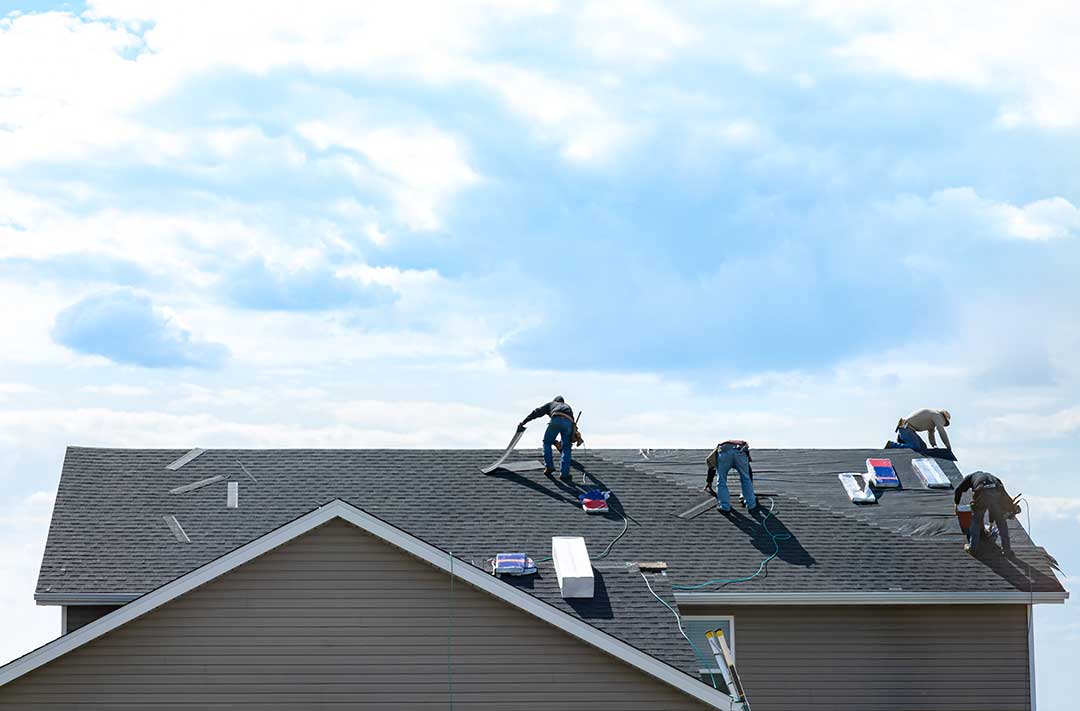
Gutters should not be inspected from an unstable ladder, during icy conditions, or near overhead electrical hazards. Falls are a serious risk, particularly when roof-edge work requires leaning or reaching.
Do gutter guards eliminate maintenance?
No. Gutter guards can reduce the amount of large debris entering a gutter, but they do not eliminate maintenance. Small seeds, roof granules, pine needles, and fine organic material may still collect on or beneath the covering. Some designs can also become difficult to inspect once snow and ice are present.
A guarded system still needs periodic observation. The main question is not whether debris exists, but whether water can move freely through the gutter and downspout.
Gutter guards may also affect how snow and ice behave at the roof edge. Their performance depends on the design, roof pitch, surrounding trees, and local weather exposure. A covered gutter that is neglected can still overflow.
What is the connection between gutters and ice dams?
Ice dams form when snow on a roof melts in one area and refreezes near a colder roof edge. Blocked gutters can make the lower edge less able to drain melting water, but they are not the only cause.
Ice dams are commonly influenced by:
- Heat escaping into the attic
- Uneven roof temperatures
- Inadequate attic insulation
- Insufficient ventilation
- Snow cover followed by fluctuating temperatures
- Debris or obstructions near the roof edge
Cleaning gutters may improve drainage, but it will not correct an attic heat problem by itself. Repeated ice dams should be treated as a whole-roof and attic-ventilation concern rather than only a gutter issue.
Removing ice with sharp tools, salt products, or force can damage shingles and create safety hazards. Roof-edge ice is especially dangerous when it hangs above entrances, walkways, or parked vehicles.
Where should downspouts discharge water?
Downspouts should direct water far enough away from the foundation that runoff does not immediately flow back toward the house. The correct arrangement depends on grading, nearby walkways, basement conditions, and the ability of the soil to absorb water.
Downspout discharge should not create a new problem by sending water onto:
- A foundation wall
- A basement stairwell
- A walkway where it can freeze
- A neighboring property
- An area that already stays saturated
- A roof below without a suitable drainage path
In compact neighborhoods, space may be limited, so drainage must be observed during wet weather. A downspout that appears properly connected can still discharge too close to the building or create concentrated erosion.
Can gutter maintenance prevent roof leaks?
Gutter maintenance can reduce several moisture risks, but it cannot prevent every roof leak. Shingle aging, flashing failures, storm damage, ventilation problems, and improperly sealed penetrations can all cause leaks independently of the gutter system.
The most useful approach is to view gutters as one part of the roof’s water-management system. Clear drainage, sound flashing, intact shingles, proper attic conditions, and well-directed downspouts work together.
If water is entering the home, if roof-edge wood feels soft, or if gutters are pulling away from the structure, the condition may involve hidden damage. Work near steep roofs, electrical lines, unstable ladders, or heavy ice should be left to someone equipped to manage those hazards safely.
