
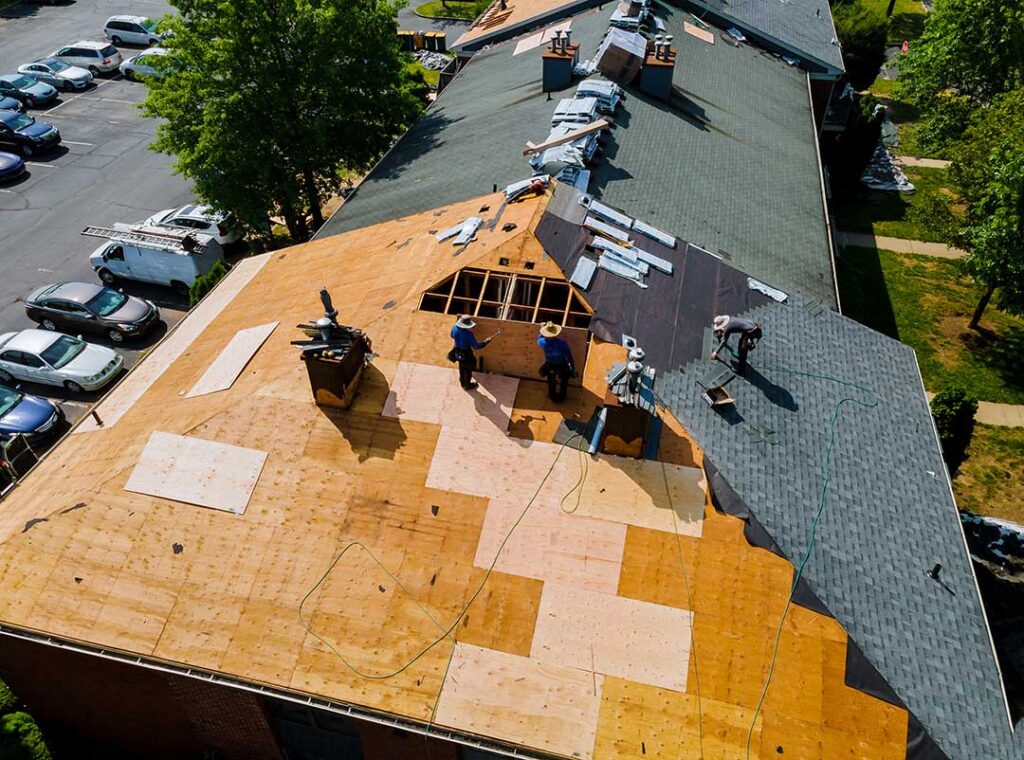
Storm damage is not always obvious from the ground. After strong wind, heavy rain, hail, or wet snow, a roof may have loose materials, blocked drainage, or water intrusion that worsens over time. Residents in Schenectady, NY can perform a careful ground-level inspection first, then decide whether the roof needs closer evaluation.
Is it safe to inspect the roof after a storm?
The safest initial inspection is from the ground, attic, and upper floors. Do not climb onto a wet, icy, steep, or visibly damaged roof, and never walk on roofing materials that may be weakened.
Before looking around the property:
- Stay clear of downed wires, leaning branches, broken glass, and unstable structures.
- Avoid areas where shingles, siding, or other materials may still be falling.
- Use binoculars or a camera with zoom rather than a ladder whenever possible.
- Keep children and pets away from damaged areas.
- Do not use a ladder near overhead electrical lines.
A roof can appear intact while its supporting structure has been affected. If the roofline sags, the attic ceiling is pulling away, or a large section is visibly displaced, remain on the ground and treat the area as hazardous.
What should be checked from the ground?
Begin by walking around the home and looking at the roof from several angles. A storm may affect one slope more severely than another, especially if wind approaches from a particular direction.
Look for:
- Shingles that are missing, lifted, curled, cracked, or shifted
- Exposed underlayment or dark areas where shingles should be present
- Metal flashing that is bent or pulled away from walls, chimneys, or roof edges
- Damaged chimney caps, masonry, vents, skylights, or roof-mounted equipment
- Gutters or downspouts that are hanging, separated, dented, or lying on the ground
- Granules collecting heavily below downspouts or in piles near foundation areas
- Tree limbs, branches, leaves, or other debris resting on the roof
- A roofline that appears uneven, bowed, or lower than it was before the storm
- New stains or damaged trim around eaves, dormers, and upper-floor windows
Hail damage can be difficult to recognize from a distance. Small circular dents, exposed shingle matting, or scattered marks on metal vents and gutters may indicate impact. A single damaged shingle does not always reveal the full extent of the problem, because hail and wind can affect a broad area.
How can water entry be detected indoors?
Water may enter through a small roof opening and travel along rafters or ceiling materials before appearing far from the original damage. Check the attic and upper floors as soon as it is safe to do so, especially after rainfall.
Inside the home, watch for:
- Brown, yellow, or gray ceiling stains
- Damp drywall, peeling paint, or bubbling surfaces
- Wet insulation in the attic
- Drips around ceiling fixtures, vents, or recessed lights
- Musty odors that were not present before the storm
- Moisture on rafters, roof decking, or the underside of the roof
- Warped trim around upper-level windows or exterior walls
- Blown-in insulation that has clumped or flattened
Do not touch a wet ceiling near a light fixture, outlet, or electrical wiring. Turn off power to the affected area only if the electrical panel and surrounding floor are dry and accessible. If water is actively entering near electrical components, stay away and seek emergency assistance.
A ceiling stain can remain visible after the surface dries, but that does not prove the roof is no longer leaking. Moisture may be trapped above the ceiling or inside insulation.
What storm damage is common in Schenectady?
The area experiences changing conditions throughout the year, so roof problems can have several causes. Summer thunderstorms may bring strong wind, hail, and short periods of intense rain. Winter storms can add heavy snow, ice buildup, freeze-thaw movement, and falling branches. Spring conditions may reveal damage that was hidden under snow or ice.
Older homes and densely built residential areas can have roof features that require extra attention, including:
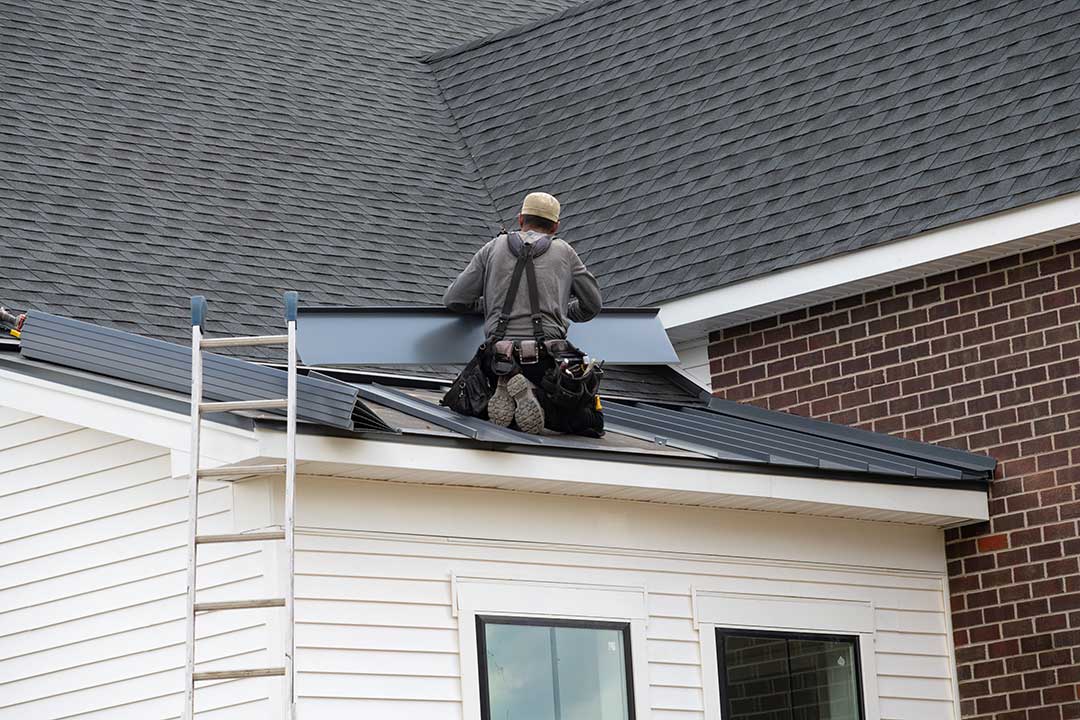
- Multiple roof additions or connecting roof sections
- Older flashing around chimneys and wall intersections
- Steep roof slopes with dormers
- Aging gutters affected by ice and snow
- Mature trees close to the roof
- Attic ventilation issues that contribute to winter moisture and ice buildup
Storm inspection should include both the roof covering and the drainage system. A roof may shed water properly until a clogged gutter, displaced flashing component, or damaged downspout causes water to back up along an edge.
Should loose shingles or debris be removed immediately?
Do not pull off loose shingles, cut branches, or climb onto the roof simply to make it look cleaner. Disturbing damaged materials can increase water entry and create additional safety risks.
Small debris on the ground can be collected if there are no sharp objects or electrical hazards. Larger limbs should remain undisturbed until they can be handled safely. If a branch is resting on the roof, assume it may have damaged the roof deck or structure beneath it.
Temporary protection may be appropriate when water is actively entering and the area can be reached safely from inside. Place containers under drips, move furniture away from wet areas, and protect belongings with plastic sheeting without trapping water against electrical equipment. Do not place a tarp on a roof unless it can be installed without climbing onto an unsafe surface.
What should be documented after the storm?
Photographs and notes help establish what changed and when. Take wide photos showing each side of the home, followed by closer images of visible damage. Include gutters, downspouts, nearby trees, roof penetrations, attic conditions, and interior stains.
Record:
- The date and approximate time of the storm
- The type of weather observed, such as wind, hail, heavy rain, or snow
- When damage was first noticed
- Locations of leaks or damp materials
- Any temporary steps taken to limit water damage
- Whether damage appears new or may have existed previously
Use a ruler or familiar object for scale only when it can be placed safely on the ground. Avoid moving evidence or making repairs before the condition has been documented, unless immediate action is necessary to prevent further property damage.
When does roof damage require urgent attention?
Urgent evaluation is warranted when there is active leaking, a sagging roofline, a large missing section of shingles, exposed roof decking, major tree impact, damaged electrical equipment, or water near lighting and wiring.
Even when no leak is visible, damage deserves prompt attention if flashing has separated, a skylight is cracked, gutters have pulled away from the fascia, or wind has lifted multiple shingles. Small openings can allow repeated wetting during later rain and can contribute to mold, rot, insulation damage, or weakened decking.
The most reliable post-storm inspection starts conservatively: stay off the roof, check from safe locations, look for indoor moisture, document changes, and treat structural or electrical hazards as emergencies. A roof that appears acceptable from the street may still need closer examination, particularly after high winds, hail, ice, or a falling limb.
