
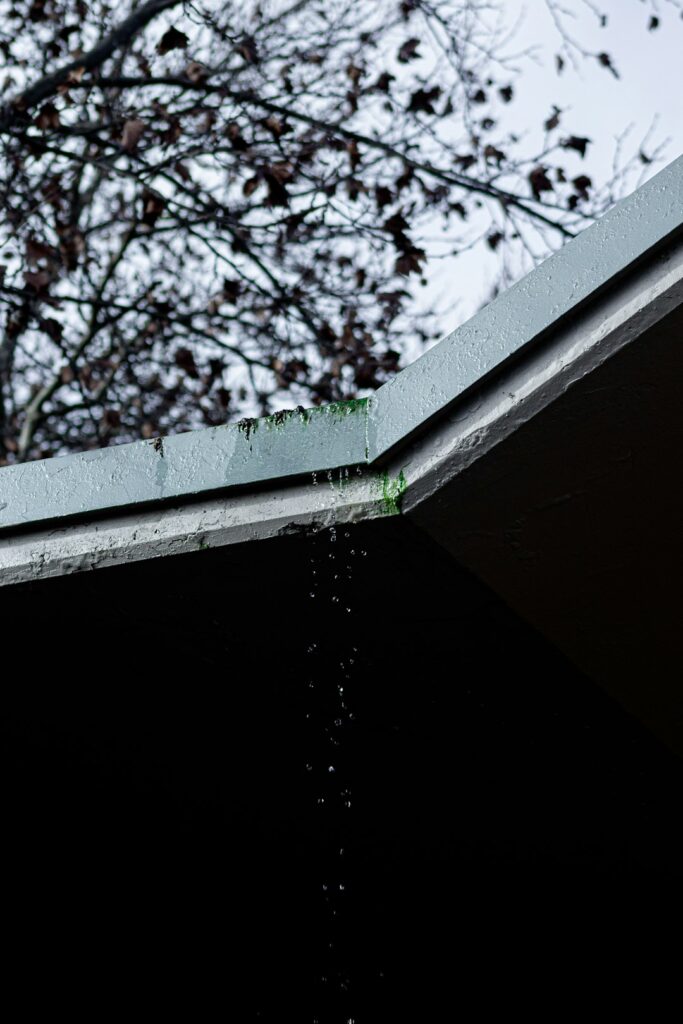
Roof drainage is the system that moves rain, melting snow, and ice away from the roof and foundation. A sound system includes roof slopes, flashing, gutters, downspouts, extensions, grading, and sometimes underground drainage.
For homes in Schenectady, NY, effective drainage matters because roofs must handle summer downpours, autumn leaves, winter snow, and repeated freeze-thaw cycles. Poor drainage can damage shingles, trim, siding, masonry, insulation, landscaping, and foundation walls even when the roof covering itself appears intact.
Why does roof drainage matter?
Roof drainage prevents water from collecting where it can cause long-term damage. Water that remains on a roof or repeatedly falls beside the foundation may eventually find its way into small gaps, joints, cracks, or porous materials.
Good drainage helps:
- Reduce roof-edge rot and deterioration of fascia boards
- Limit staining and decay on siding and exterior trim
- Keep foundation walls and basement areas drier
- Prevent soil erosion around the house
- Reduce ice buildup at roof edges
- Direct runoff away from walkways, doors, and neighboring areas
- Protect landscaping from concentrated streams of water
A gutter system is not intended to make water disappear. It is meant to collect runoff and release it at a controlled location where the ground can absorb it or where an approved drainage system can carry it away.
What is the correct path for roof runoff?
The preferred path is continuous: roof surface, gutter or roof drain, downspout, extension or underground outlet, and stable discharge area.
Each part should support the next. A gutter that holds water because it sags, for example, can overflow before the downspout is able to carry the flow. A downspout that ends beside the foundation may move water away from the roof but still place too much moisture near the basement wall.
Downspout outlets should discharge onto a surface that slopes away from the building. In many situations, a long extension or a properly designed underground outlet is more effective than a short piece that ends directly below the eave.
Water should not be directed toward:
- Foundation walls
- Basement stairwells
- Door thresholds
- Areas of standing water
- Steep slopes that may erode
- Walkways where winter ice could form
- Another property or an area where runoff creates a nuisance
The final discharge point deserves as much attention as the gutter itself.
How should gutters be installed and maintained?
Gutters should have a consistent slope toward their outlets and should be firmly attached to the roof edge. They should not dip between supports or pull away from the fascia. Seams, end caps, and outlet connections need to remain sealed but should not be treated as a substitute for proper alignment.
Maintenance is especially important during the leaf season and before winter. Organic debris can block outlets, slow drainage, and add considerable weight to the gutter. Ice can then form in the trapped water, increasing stress on the gutter and its fasteners.
A practical maintenance routine includes:
- Inspecting gutters in spring and late autumn
- Removing leaves, roof grit, twigs, and sediment
- Checking for sagging sections and loose fasteners
- Looking for water stains below seams
- Confirming that downspouts are open from top to bottom
- Checking that extensions have not shifted or become crushed
- Observing the system during a moderate rain
The last step is often overlooked. A visual inspection during dry weather may not reveal overflow caused by an undersized outlet, blocked connection, or low section.
How do snow and ice affect roof drainage?
Snow and ice can interrupt drainage even when the roof system is otherwise well designed. In winter, meltwater may run toward colder roof edges and refreeze. This can create ice dams, which may force water beneath shingles or behind roof-edge materials.
Ice dams are influenced by several conditions, including heat loss through the attic, inadequate air sealing, uneven roof temperatures, snow depth, and weather patterns. Gutters do not cause every ice dam, but blocked gutters can make the consequences worse by preventing meltwater from leaving the roof edge.
Safe winter practices include:
- Keeping attic insulation and ventilation functioning as designed
- Avoiding the use of salt or corrosive chemicals on roofing materials
- Never climbing onto an icy roof without proper training and fall protection
- Watching for interior stains near exterior walls and roof edges
- Checking whether downspout outlets remain open after snow and ice events

Snow removal from a roof can be hazardous and may damage shingles, flashing, or gutters if done improperly. Heavy snow loads, visible structural sagging, or large ice formations warrant a qualified assessment rather than improvised removal.
What roof details commonly create drainage problems?
Many drainage failures begin at transitions rather than in the middle of a roof slope. Valleys, dormers, chimneys, wall intersections, skylights, and roof additions concentrate water and require carefully installed flashing.
Common problem areas include:
- Valleys filled with leaves or roof debris
- Gutters installed too low or too far from the roof edge
- Missing or damaged drip edge
- Downspouts serving too much roof area
- Roof sections draining onto lower roofs without adequate protection
- Short downspout extensions
- Flashing that directs water behind siding
- Flat or low-slope sections with insufficient drainage
- Underground outlets blocked by soil, roots, or ice
Water marks on soffits, peeling paint, deteriorated masonry, or damp basement corners may indicate a drainage problem even if no active roof leak is visible.
Are gutters always required?
Not every roof uses conventional gutters, but every roof needs a reliable drainage plan. Some structures may use carefully designed overhangs, swales, splash areas, scuppers, internal drains, or other methods. The right choice depends on roof shape, slope, building height, soil conditions, nearby structures, and local requirements.
For typical houses, uncontrolled water dropping from a roof edge can erode soil and saturate the ground near the foundation. A broad roof overhang may reduce the concentration of runoff, but it does not automatically solve drainage concerns.
New construction, additions, roof alterations, and significant grading changes may also be subject to New York State and local building or stormwater requirements. Drainage should be considered before changing a roofline, adding a porch, enclosing an area, or routing water underground.
How can homeowners check roof drainage safely?
A ground-level inspection after rain can reveal a great deal. Look for overflowing gutters, water spilling behind the gutter, puddles beside the foundation, eroded soil, disconnected downspouts, and wet areas that remain long after rainfall ends.
Inside the house, inspect attic areas and upper corners for damp insulation, darkened wood, peeling finishes, or musty odors. These signs do not identify the exact source by themselves, because roof leaks, condensation, plumbing leaks, and ice dams can look similar.
Use caution around ladders, steep roofs, electrical lines, icy surfaces, and unstable gutters. Conditions involving structural movement, significant leakage, suspected electrical exposure, or difficult roof access should not be handled as a routine cleaning task.
The most dependable drainage system is not necessarily the most elaborate. It is the one that provides a continuous, unobstructed route from the roof to a safe discharge area and continues to work after heavy rain, falling leaves, snow, and freezing temperatures.
