
Which roof style is better for a home?
Neither flat roofs nor sloped roofs is automatically the right choice for every property. The better option depends on the building’s design, how water and snow will be managed, available attic space, maintenance expectations, and long-term repair costs.
For many traditional houses, a sloped roof works naturally with the structure and provides reliable drainage during rain and winter weather. Flat roofs can be practical for additions, garages, commercial-style buildings, and modern homes, but they require careful attention to drainage and membrane condition.
A roof’s shape affects more than appearance. It influences ventilation, insulation, usable interior space, snow performance, material choices, and how easily maintenance issues can be detected.
What is the difference between a flat roof and a sloped roof?
A flat roof has a very low pitch rather than being perfectly level. It is usually built with a continuous waterproofing membrane and includes drains, scuppers, or slightly sloped sections that direct water away from the surface.
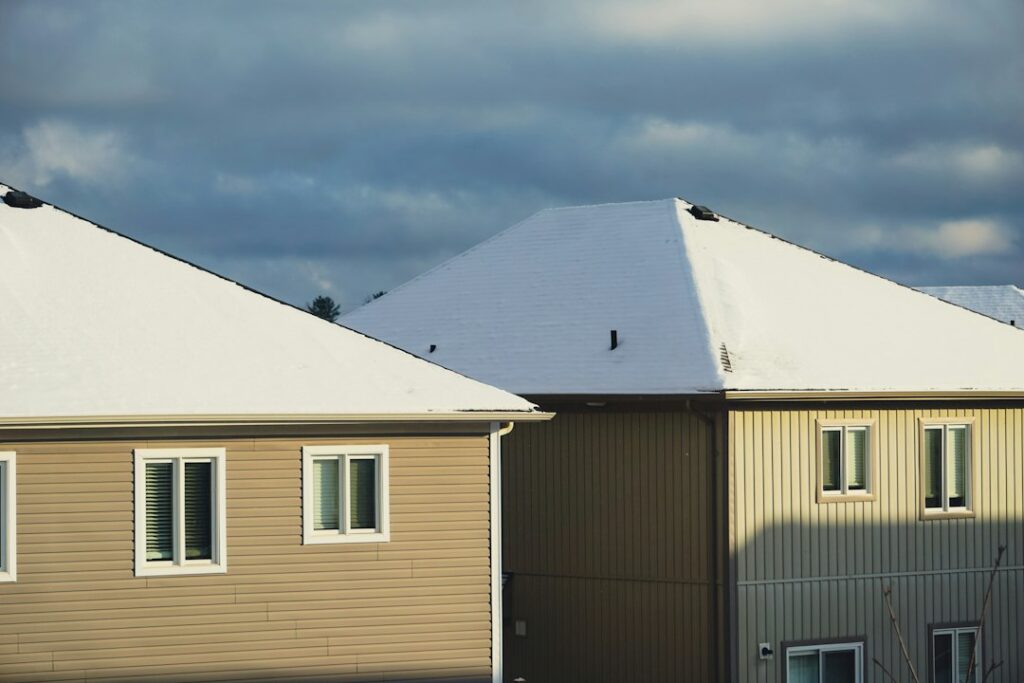
A sloped roof has a noticeable angle, allowing water to run toward gutters or roof edges. Common designs include gable, hip, and shed roofs. Sloped roofs are often covered with asphalt shingles, metal panels, slate, or other overlapping materials.
The distinction is mainly about drainage and construction. Flat roofs depend on designed drainage systems and waterproof membranes. Sloped roofs use gravity and layered roofing materials to shed water more quickly.
Why do sloped roofs work well in Schenectady?
Sloped roofs are often well suited to homes in Schenectady because the region experiences rain, freezing temperatures, ice, and recurring snow. A pitched surface helps precipitation move off the roof rather than remain in place.
That does not mean every sloped roof performs equally well. The pitch, flashing, ventilation, insulation, gutters, and roof covering all matter. A low-slope roof may drain more slowly than a steep roof, while a very steep roof can be harder to maintain safely.
Advantages of a sloped roof commonly include:
- Faster drainage during rain and thawing conditions
- Less standing water on the roof surface
- More options for attic insulation and ventilation
- Potentially longer service life for some roofing materials
- Better protection for roof edges when gutters and flashing are properly maintained
- Additional attic or storage space in some designs
A sloped roof can also make it easier to identify certain problems from the ground. Missing shingles, sagging sections, and damaged flashing may be visible before they cause interior damage.
What are the strengths and weaknesses of a flat roof?
Flat roofs can make efficient use of a building’s upper surface and may suit additions, porches, attached garages, and contemporary designs. They can also simplify the shape of a building and provide space for rooftop equipment where permitted by the structure and local requirements.
The main challenge is that water does not leave the surface as quickly as it does on a pitched roof. Even a small drainage problem can allow water to remain on the membrane, especially after heavy rain or melting snow.
Potential advantages include:
- A clean, modern appearance
- Easier access for some maintenance tasks
- Efficient use of space on low-rise additions
- Compatibility with certain rooftop mechanical systems
- Fewer sloped surfaces around dormers, valleys, and complex roof intersections
The tradeoff is greater dependence on the membrane, seams, flashing, drains, and edge details. Ponding water, blocked drains, punctures, and freeze-thaw movement can shorten the roof’s service life if they are not addressed.
A flat roof should not be treated as maintenance-free. Leaves, branches, ice, and debris can interfere with drainage, and small membrane defects may allow water into insulation or roof decking before stains appear indoors.
Which roof lasts longer?
Service life depends more on design, materials, installation quality, ventilation, drainage, and maintenance than on roof shape alone. A well-built flat roof can last for many years, while a poorly drained sloped roof can develop serious problems early.
Sloped roofs often have an advantage because water and snow are less likely to remain on the surface. However, they may contain more vulnerable areas, including valleys, chimneys, skylights, dormers, and roof-to-wall connections.
Flat roofs may have fewer visible components but place heavy demands on the waterproofing system. Membrane seams, penetrations, perimeter edges, and drainage points deserve particular attention.
Age alone is not enough to determine whether replacement is necessary. Warning signs include repeated leaks, widespread surface damage, deteriorated flashing, soft decking, sagging, interior staining, and repairs that no longer address the underlying problem.
How do snow and ice affect each roof type?
Snow does not automatically make a flat roof unsafe, and a sloped roof does not automatically eliminate winter risks. The structure must be designed for expected loads, and drainage must remain functional during freezing and thawing cycles.
On sloped roofs, snow can slide unexpectedly, especially from smooth metal surfaces or steep sections. Snow guards may be appropriate in areas above entrances, walkways, or frequently used spaces.
On flat roofs, snow typically remains until it melts or is removed by weather conditions. The roof structure, drains, and membrane must be able to handle the weight and moisture. Ice can block drainage paths, causing meltwater to collect and refreeze.
Homeowners should not climb onto a snow-covered or icy roof. The risk of slipping, falling through weakened areas, or damaging the roof surface is significant. Snow removal also requires care because shovels and other tools can puncture membranes or scrape protective granules from shingles.
Which roof is easier to insulate and ventilate?

Sloped roofs often provide more options for attic insulation and natural ventilation. A properly designed attic can help reduce heat loss and limit ice-dam formation by keeping the roof surface closer to outdoor temperatures.
Flat roofs can also be insulated effectively, but the assembly is usually more specialized. Insulation may be installed above the roof deck, between structural members, or as part of a low-slope roofing system. Poorly designed insulation can create condensation problems that remain hidden inside the roof.
In either design, attic or roof ventilation should not be used as a substitute for adequate insulation and air sealing. Warm indoor air leaking into a cold roof cavity can contribute to condensation, moisture damage, and winter ice problems.
Is a flat roof or sloped roof cheaper?
Initial cost varies widely. A simple sloped roof may be economical, but complex slopes with multiple valleys, dormers, chimneys, and skylights can become expensive. A flat roof may use fewer materials and have a simpler shape, yet require higher-cost membranes, insulation systems, edge details, or specialized drainage work.
Long-term cost should include more than installation. Consider:
- Expected service life of the roofing material
- Frequency of inspections and maintenance
- Ease of finding and repairing leaks
- Cost of replacing damaged insulation or decking
- Gutter, drain, flashing, and snow-management needs
- Whether the roof design fits the existing structure
The least expensive installation is not always the least expensive roof over time. Drainage, ventilation, and compatibility with the building are usually more significant than the shape alone.
How should a homeowner choose?
Start with the building rather than personal preference. A roof replacement should generally preserve the structure’s drainage pattern, framing capacity, ventilation strategy, and architectural proportions unless a larger redesign is being considered.
A sloped roof may be the practical choice for a conventional house with an attic, especially where snow shedding and straightforward drainage are priorities. A flat roof may make more sense for a low-slope addition, garage, porch, or modern structure designed around a membrane roofing system.
Before choosing, examine:
- Existing roof pitch and structural framing
- Areas where water currently collects
- Attic moisture, insulation, and ventilation conditions
- Locations of chimneys, walls, skylights, and roof penetrations
- Gutter, downspout, drain, and discharge arrangements
- Safe access for future inspection and maintenance
- Local building requirements for structural changes
For homes in Schenectady, winter precipitation and freeze-thaw conditions make drainage and moisture control especially important. The most suitable roof is usually the one that matches the building, moves water reliably, handles expected weather loads, and can be maintained safely over its full service life.
